The Ultimate Guide to Cleaning and Caring for Your Letterman Jacket
A letterman jacket is a timeless piece of clothing that combines personal style, comfort, and lasting memories. Whether you wear it to school, college events, sports games, or casual outings, keeping it clean helps maintain its original look and quality.
Most letterman jackets feature a combination of materials, such as wool, genuine leather, synthetic leather, and embroidered patches. Because each material requires different care, cleaning your jacket the wrong way can cause fading, shrinking, or damage to its details.
The good news is that proper maintenance does not have to be complicated. With a few simple habits and the right cleaning methods, you can keep your letterman jacket looking its best for years.
In this guide, we will explain how to clean, protect, and store your letterman jacket while helping you avoid common care mistakes.
Understand the Materials of Your Letterman Jacket
Before cleaning your letterman jacket, check the care label to identify its materials. Understanding the fabric is the first step toward choosing a suitable cleaning method.
Wool Fabric
Wool is commonly used for the body of traditional letterman jackets. It provides warmth and a classic appearance, but excessive moisture and heat can cause shrinking or changes in shape.
To keep wool looking fresh, remove dust regularly with a soft clothing brush. Avoid soaking the fabric or using strong cleaning products.
Genuine Leather Sleeves
Genuine leather sleeves give many varsity jackets their distinctive appearance. Leather requires careful handling because harsh chemicals, excessive water, and unsuitable conditioners may affect its texture and color.
Use products specifically designed for the type of leather in your jacket. If you are unsure which product is suitable, consult a leather care professional.
Synthetic Leather Sleeves
Some letterman jackets feature synthetic leather instead of genuine leather. This material may require less conditioning, but it can still become damaged by excessive heat, abrasive cleaning, or unsuitable chemicals.
Always follow the manufacturer’s care instructions before applying any cleaning or conditioning product.
Embroidered Patches and Decorative Details
Patches, lettering, buttons, and embroidery often give a letterman jacket its personal character. These details may be sensitive to friction, moisture, and heat.
Clean around decorative areas gently and check the stitching occasionally to identify loose threads before they become a bigger problem.
How to Clean a Letterman Jacket at Home
Regular maintenance can help prevent dirt from building up and keep your jacket looking neat. However, the safest cleaning method depends on the jacket’s construction and care label.
Check the Care Instructions
Start by reading the manufacturer’s cleaning instructions. Some jackets require professional dry cleaning, while others may allow limited spot cleaning.
If the jacket combines wool and genuine leather, avoid placing the entire garment in a washing machine unless the manufacturer specifically confirms that it is safe.
Remove Dust and Surface Dirt
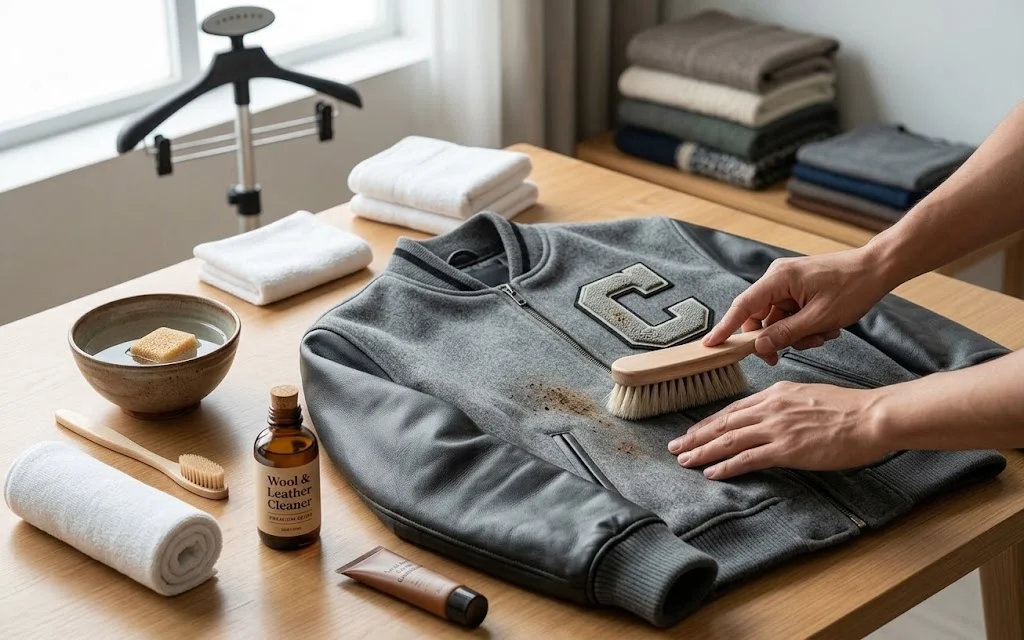
Use a clean, soft clothing brush to remove dust and loose dirt from the jacket. Pay attention to the collar, cuffs, pockets, and areas around the patches.
Brush gently to avoid pulling fibers or damaging decorative details. Regular brushing is a simple way to keep your jacket looking presentable between deeper cleanings.
Treat Small Stains Carefully
If you notice a small stain, deal with it as soon as possible. Gently blot the affected area with a clean cloth instead of rubbing it aggressively.
For wool sections, use only a cleaning method suitable for the fabric. For leather sleeves, select an appropriate leather cleaner and test it on a hidden area before treating the visible surface.
Avoid soaking the jacket or applying an untested product across the entire garment.
Allow the Jacket to Dry Naturally
After spot cleaning, let the jacket dry naturally in a well-ventilated area if the care instructions permit it.
Keep it away from direct sunlight, radiators, and hair dryers. Excessive heat can affect wool, leather, and synthetic materials.
Make sure the jacket is completely dry before storing it.
How to Care for Leather Sleeves
Leather sleeves need particular attention because unsuitable cleaning products can cause discoloration, dryness, or surface damage.
Choose a Suitable Leather Cleaner
Use a cleaner intended for the specific type of leather in your jacket. Apply the product according to its instructions, using a soft cloth if recommended.
Avoid bleach, strong household detergents, and abrasive sponges. These products can damage the surface and affect the jacket’s appearance.
Always test a new product on a small, hidden area first.
Maintain the Leather’s Condition
Genuine leather can become dry over time. A compatible leather conditioner may help maintain its flexibility when used according to the product instructions.
However, not every leather finish responds well to conditioning. Check the manufacturer’s recommendations before applying anything.
Synthetic leather generally has different care requirements and should not automatically be treated with products made for genuine leather.
Protect Leather From Excess Moisture
If your jacket gets wet, gently blot away excess water with a clean, dry cloth. Allow it to air dry naturally according to its care instructions.
Do not place it near a heater or use direct heat to speed up the process. If the leather develops noticeable discoloration, stiffness, or cracking, consider professional care.
Keep the Wool Body Clean and Fresh
The wool body of a letterman jacket can retain dust, lint, and everyday odors. Gentle maintenance helps preserve its appearance without unnecessary washing.
Brush Wool Regularly
Use a soft garment brush to remove loose dirt and lint. Brush gently in one direction to avoid disturbing the fibers.
If small fabric pills appear, use a suitable fabric comb carefully. Avoid pulling fibers by hand because this may create additional damage.
Avoid Unnecessary Washing
Frequent washing can affect wool fibers, jacket construction, and decorative details. Unless the care label clearly allows machine washing, avoid washing the entire jacket at home.
For deep cleaning, follow the manufacturer’s recommendations or choose a professional cleaner experienced in handling wool garments.
Maintain the Jacket’s Shape
Hang your letterman jacket on a sturdy, wide hanger that supports the shoulders. This helps reduce unwanted stretching and keeps the garment in better shape.
Avoid hanging it on thin wire hangers for extended periods.
How to Protect Letterman Jacket Patches
The patches and embroidery on a letterman jacket are often among its most recognizable features. Keeping them in good condition helps preserve the jacket’s overall appearance.
Clean Decorative Areas Gently
Avoid scrubbing embroidered letters, logos, and patches. Use a soft brush or an appropriate cleaning method to remove surface dust without putting unnecessary pressure on the stitching.
If a patch becomes stained, check the materials involved before choosing a cleaning product.
Inspect the Stitching
Check the patches, seams, buttons, and cuffs occasionally. If a patch begins to lift or a thread becomes loose, arrange a repair before the damage spreads.
Do not pull loose threads because this can weaken the surrounding stitching.
Avoid Direct Heat
High temperatures may affect embroidery, synthetic materials, adhesives, and leather details. Do not iron your jacket unless the care label specifically permits it and explains the appropriate method.
For difficult wrinkles, ask a garment care professional for advice.
Common Letterman Jacket Care Mistakes to Avoid
Even a well-made jacket can lose its appearance if it is cleaned or stored incorrectly. Avoid these common mistakes to help maintain its condition.
Using Hot Water
Hot water may shrink wool or affect materials and decorative details. Always follow the garment’s care instructions rather than assuming that regular washing methods are suitable.
Applying Harsh Cleaning Products
Bleach, strong detergents, and abrasive cleaners may cause discoloration or damage. Choose products that are appropriate for the specific material you are cleaning.
Drying the Jacket With Direct Heat
Radiators, hair dryers, and other direct heat sources can affect leather, wool, and synthetic materials. Natural drying is generally the safer option when permitted by the care instructions.
Storing the Jacket While Damp
Putting away a damp jacket can encourage unpleasant odors and mold growth when storage conditions are humid. Allow the garment to dry completely before placing it in a wardrobe or garment cover.
Ignoring Small Repairs
Loose buttons, lifting patches, and damaged seams can become more difficult to repair over time. Checking these areas regularly helps you address problems early.
How to Store Your Letterman Jacket Properly
Correct storage is important whether you wear your jacket every week or only during certain seasons.
Start by making sure the jacket is clean and completely dry. Hang it on a sturdy, wide hanger in a cool, dry place away from direct sunlight.
A breathable garment cover can help protect it from dust while allowing air circulation. Avoid keeping the jacket in a damp location or compressing it under heavy clothing.
For long-term storage, inspect the jacket occasionally for signs of moisture, insects, or damage. These simple checks can help you identify potential problems before they become serious.
How Often Should You Clean a Letterman Jacket
There is no single cleaning schedule that works for every letterman jacket. How often you need to clean yours depends on how frequently you wear it, the surrounding conditions, and the manufacturer’s recommendations.
For regular wear, remove surface dust as needed and check for stains after use. Treat small marks promptly using a method suitable for the material.
Deep cleaning is only necessary when the jacket’s condition calls for it. Avoid unnecessary washing, especially when the garment contains several different materials.
If the jacket has a difficult stain or needs extensive cleaning, professional care may be the safest choice.
When to Choose Professional Cleaning
Some jackets require specialized attention, particularly when they combine wool, genuine leather, decorative patches, and delicate stitching.
Consider professional cleaning if your jacket has extensive staining, persistent odors, or materials that are difficult to clean safely at home.
Professional assistance may also be worthwhile for vintage jackets or garments with sentimental value.
Before choosing a cleaner, explain the materials used in your jacket and mention any existing stains or damaged areas. A cleaner with experience handling mixed-material garments can help you understand the available cleaning options.
Simple Habits That Help Your Jacket Last Longer
Taking care of your letterman jacket does not require a complicated routine. A few practical habits can make everyday maintenance easier.
Hang the jacket properly after wearing it and allow it to air out when needed. Avoid leaving it crumpled in a bag for long periods.
Keep it away from unnecessary moisture, rough surfaces, and direct heat. Remove surface dust regularly and deal with stains before they become more difficult to treat.
Check the buttons, patches, and stitching from time to time. Small repairs and careful handling can help preserve the jacket’s appearance.
Final Thoughts
A letterman jacket can remain a valuable part of your wardrobe when you give it the right care. Understanding its materials, following the manufacturer’s instructions, cleaning stains carefully, and storing it properly can help maintain its appearance over time.
Avoid harsh chemicals, excessive heat, and unnecessary washing. When you are unsure how to clean a particular material, seek advice from a qualified garment care professional.
With a thoughtful maintenance routine, your letterman jacket can continue to look stylish and well cared for, whether you wear it every day or save it for special occasions.